
Updated September 2026. General information only, not legal or tax advice — have an independent Thai lawyer check any purchase.
1. Check you can own it freehold
Foreigners can buy a condominium unit in Thailand freehold, in their own name, as long as the unit is registered within the building's foreign quota: up to 49% of the total saleable area (Condominium Act B.E. 2522, section 19 bis). Before you reserve, ask the developer to confirm in writing that your unit falls inside the quota. If the quota is full, the alternative is a registered lease of up to 30 years.
2. Plan the money transfer
For a freehold registration the full price has to arrive in Thailand from abroad in foreign currency (section 19 ter). The Thai bank that receives it issues the proof the Land Office needs — a Foreign Exchange Transaction form or a credit advice, depending on the amount. Send the payments in your own name and state the purpose as purchase of a condominium unit.
3. Understand how you are allowed to rent it out
Thailand's Hotel Act generally requires a hotel licence to let accommodation for periods shorter than 30 days. That is why many owners of holiday condos join a rental pool or management programme run by an operator, rather than letting the unit day by day themselves. Monthly and longer lets are simpler. Always ask how a building's rental programme is licensed and how income and costs are shared.
4. Budget the transfer costs
| Item | Typical rate | Who usually pays |
|---|---|---|
| Transfer fee | 2% of the Land Office appraised value | Often shared — set by the contract |
| Specific business tax | 3.3%, if the seller owned the unit under 5 years | Seller |
| Stamp duty | 0.5%, only if business tax does not apply | Seller |
| Withholding tax | Depends on the seller and holding period | Seller |
| Sinking fund | One-off, set per m² by the building | Buyer |
The temporary cut of the transfer fee to 0.01% (1 July 2026 – 30 June 2027) is for Thai nationals only.
5. Count the running costs
Owners pay common-area (maintenance) fees per m² to the building's juristic person, plus utilities. If you join a rental programme, the operator's share and furnishing upkeep come out of the rental income. Rental income from Thai property is taxable in Thailand — ask an accountant how it applies to you.
6. Choose a unit that rents
For holiday letting, the practical questions are simple: how far is the beach, is the unit furnished, does the building have the facilities guests expect, and does the layout suit couples, friends and families. Twin beds that can be joined, a balcony and a second bathroom in larger units all widen the audience.
Surin Sands in short
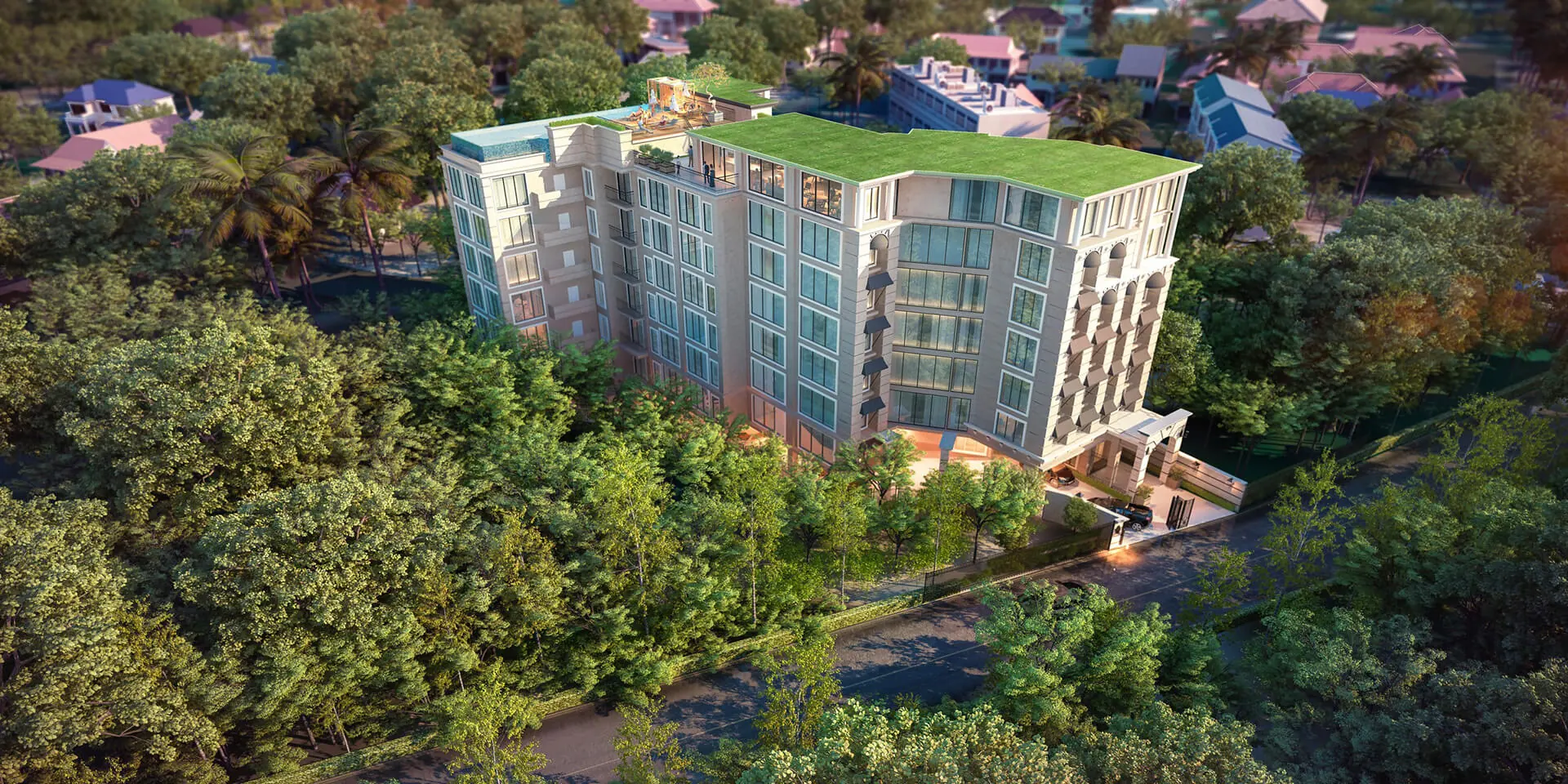
- 82 fully furnished units of 30–81 m² — studios, 1- and 2-bedroom apartments
- A short walk to Surin Beach and Bang Tao Beach in Choeng Thale
- Rooftop infinity pool, restaurant and bar, gym, 24/7 security
- Rental pool programme for owners
Ask which units are available under the foreign quota and for the rental programme terms: +66 76 530 503.
Quick answers
Can a foreigner own a condo in Phuket?
Yes — freehold, as long as the unit is registered within the building's foreign quota of up to 49% of the saleable area.
Can I rent my condo out by the night?
Stays shorter than 30 days generally require a hotel licence under Thailand's Hotel Act, which is why owners often use a licensed operator's rental programme.
What does it cost to transfer ownership?
The main item is the 2% transfer fee on the appraised value, usually split by agreement; business tax or stamp duty and withholding tax are normally paid by the seller.